Types of Proportional Valves: A Technical Guide to Selecting the Right One
Types of Proportional Valves: A Technical Guide to Selecting the Right One
Not all proportional valves are the same. The term covers a wide range of devices that differ in how they control fluid, what actuator moves them, how many media channels they handle, and whether they work in open or closed loop. Choosing the wrong type adds complexity to your system and limits long-term performance.
This guide maps the main types of proportional valves across four classification criteria, and sets out the decision factors that matter most in OEM and industrial applications.
A proportional valve is a control valve that adjusts flow, pressure, or direction in continuous proportion to an electrical input signal. Unlike an on/off solenoid valve (which switches between fully open and fully closed), a proportional valve can hold any position within its operating range.
The input signal can be analogue (0-10 V, 4-20 mA) or digital (PWM, RS-485, I2C). The valve translates that signal into a mechanical displacement of a spool, needle, or diaphragm, which in turn throttles the fluid path. The output tracks the input without discrete steps or hysteresis, provided the valve is correctly specified for the application.
The practical result is variable control from a single component: no separate throttle valve, no external PID controller in more advanced designs, no mechanical adjustments on the production line.
How proportional valves are classified
We can classify proportional valves by four independent criteria. Each one determines a different constraint in your system design, and the combination of all four defines which valve fits a specific application.
1. Classification by control function
Control function defines what the valve does in the circuit: regulate pressure, control flow rate, or manage direction. It is the first question to answer before evaluating any other specification.
Proportional pressure control valves regulate outlet pressure in proportion to the input signal. As the signal rises, the valve allows higher upstream pressure to pass downstream, up to the configured maximum. They are used in applications that require stable, programmable pressure levels: gas blending, ventilators, sterilization systems, and injection moulding.
Proportional flow control valves regulate the volumetric flow rate of the fluid. Flow tracks the input signal linearly across the full operating range. They control the speed of actuators, the dose volume in dispensing systems, or the feed rate in analytical instruments.
Proportional directional control valves regulate both flow direction and flow rate simultaneously. A single valve replaces a separate direction valve and a throttle valve. They are predominantly used in hydraulic systems: mobile equipment, industrial automation, agricultural machinery.
The actuator converts electrical signal into mechanical displacement and determines power consumption, noise, and long-term reliability. Four technologies are in active commercial use, each with a different trade-off profile.
Solenoid (electromagnetic). A coil generates a magnetic field proportional to current, pulling a plunger against a spring. Solenoid-actuated valves are well-understood and available in every size. Their documented limitations include high current draw, heat generation, acoustic noise, and wear from repeated plunger impact. In precision applications these limitations drive up system cost through thermal management, acoustic shielding, and shortened maintenance intervals.
Electromagnetic (stepper or DC motor). The motor drives the valve element via a screw or gear mechanism. Higher positional accuracy than solenoid; lower bandwidth.
Piezoelectric. A piezo stack changes dimensions under voltage, directly displacing the valve element. Extremely fast response (sub-millisecond). Limited stroke; typically limited to small flow rates. Used in high-frequency applications: fuel injection, inkjet, analytical instruments.
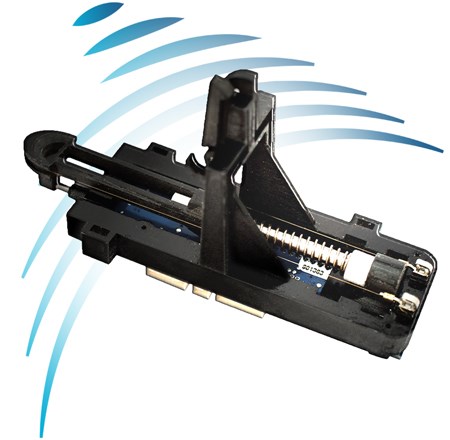
Shape Memory Alloy (SMA). The actuator is made from a metal alloy that contracts when electrically heated, generating the mechanical force to open the valve. On cooling, a return spring resets the element. The SMA actuator eliminates the plunger impact mechanism; there are no moving metal surfaces in contact under load. The result is silent operation, no heat dissipation into the medium, and no mechanical wear from repeated actuation cycles.
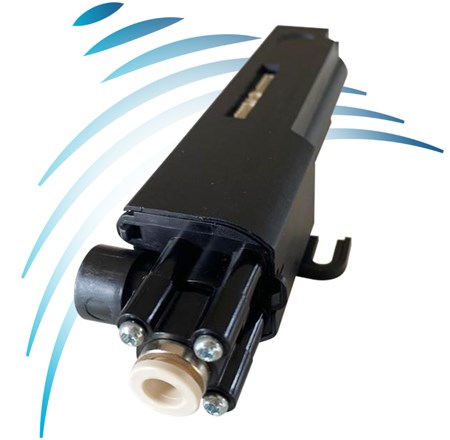
Dolphin Fluidics develops SMA-actuated proportional valves. The technology delivers up to 20% lower power consumption compared to solenoid equivalents, and the actuator's inherent characteristics produce a flat performance curve with no drift over time.
3. Classification by valve design
Valve design determines how the actuator force is transmitted to the fluid path, and sets the upper limit on flow capacity and operating pressure.
Direct-operated valves have the actuator acting directly on the main valve element: spool, needle, or diaphragm. They are compact, fast, and require no pilot pressure. Suitable for lower flow rates and pressures where the actuator force is sufficient to overcome the fluid forces on the valve element.
Servo-assisted (pilot-operated) valves use a small pilot valve to control a larger main stage. The pilot valve is proportional; the main stage is hydraulically or pneumatically amplified. This allows very large flow or pressure capacity from a compact actuator. Used in high-flow hydraulic applications.
4. Classification by default state
Normally closed (NC): the valve is closed in the absence of power. No medium flows until the signal is applied. Dolphin Fluidics proportional valves are normally closed valves with on/off and proportional control. The valves integrate digital electronics enabling closed loop proportional control of the fluid flow, eliminating any performance drift during operation, thus ensuring extremely high positioning accuracy and flowrate control.
Normally open (NO): the valve is open in the absence of power. Medium flows freely until the signal is applied. Used in applications where an uncontrolled flow stoppage would be hazardous, such as certain gas supply circuits.
Comparison table: proportional valve types at a glance
Type
Description
Typical applications
1. Control function
Pressure control
Regulates outlet pressure in proportion to the input signal. As the signal rises, the valve allows higher upstream pressure to pass downstream.
Gas blending, ventilators, sterilization systems, injection moulding
Flow control
Regulates the volumetric flow rate of the fluid. Flow tracks the input signal linearly across the full operating range.
Regulates both flow direction and flow rate simultaneously. A single valve replaces a separate direction valve and a throttle valve.
Mobile hydraulics, industrial automation, agricultural machinery
2. Actuator technology
Solenoid (electromagnetic)
A coil generates a magnetic field proportional to current, pulling a plunger against a spring. Documented limitations: high current draw, heat generation, acoustic noise, and wear from repeated plunger impact.
General use; requires thermal management and acoustic shielding
Electromagnetic (stepper or DC motor)
The motor drives the valve element via a screw or gear mechanism. Higher positional accuracy than solenoid; lower bandwidth.
Low-frequency applications requiring high positional accuracy
Piezoelectric
A piezo stack changes dimensions under voltage, directly displacing the valve element. Extremely fast response (sub-millisecond). Limited stroke; typically limited to small flow rates.
A metal alloy actuator contracts when electrically heated, generating the mechanical force to open the valve. No moving metal surfaces in contact under load: silent operation, no heat dissipation into the medium, no wear from repeated actuation cycles. Up to 20% lower power consumption compared to solenoid equivalents. (Dolphin Fluidics technology)
Precision applications, noise- and temperature-sensitive environments
3. Valve design
Direct-operated
The actuator acts directly on the main valve element: spool, needle, or diaphragm. Compact, fast, requires no pilot pressure. Suitable for lower flow rates and pressures.
Compact low-to-medium flow systems
Servo-assisted (pilot-operated)
A small proportional pilot valve controls a larger hydraulically or pneumatically amplified main stage. Allows very large flow or pressure capacity from a compact actuator.
High-flow hydraulic applications
4. Default state
Normally closed (NC)
The valve is closed in the absence of power. No medium flows until the signal is applied. Dolphin Fluidics NC proportional valves integrate digital electronics enabling closed-loop proportional control, eliminating performance drift and ensuring high positioning accuracy.
Standard applications, safe controlled flow shutoff
Normally open (NO)
The valve is open in the absence of power. Medium flows freely until the signal is applied.
Circuits where an uncontrolled flow stoppage would be hazardous (e.g. gas supply)
Single-channel vs dual-channel proportional valves
Channel count is a structural design parameter that is rarely covered in general classification guides, but it is one of the most consequential decisions in OEM system design.
A single-channel valve controls one media path. The actuator moves a single valve element that throttles one fluid circuit. For instance, the Smart HP Air Valve from Dolphin Fluidics is a single-channel valve: it controls either air/gas (0-4 bar) or liquid (0-20 bar) through a single proportional orifice.
A dual-channel valve controls two independent media paths within a single housing, each with its own actuator and valve element. The two circuits are mechanically and fluidically separated. This architecture has direct implications for:
System BOM: one component replaces two valves, two connectors, and two mounting points.
Hygiene and safety: the dual-channel design enables full medium separation between an air circuit and a liquid or vapour circuit, a requirement in medical, food, and beverage applications.
Synchronised control: both channels are driven by the same 32-bit microprocessor, enabling coordinated setpoint management without external synchronisation logic.
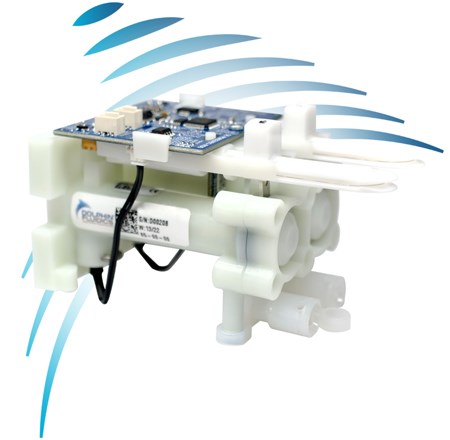
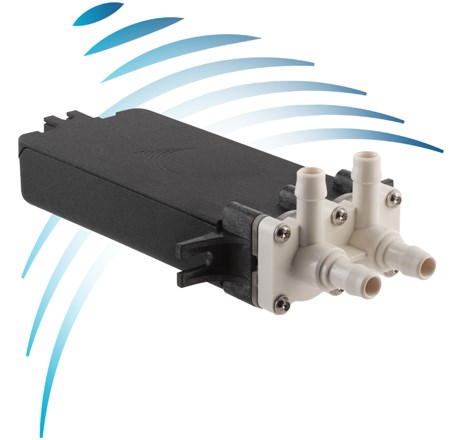
Dolphin Fluidics offers three dual-channel proportional valves. The EAV Valve handles air and vapour/liquid (0-2 bar), suited for steam and condensate circuits in coffee machines and similar applications. The Digimed Valve is ISO 10993 compliant for healthcare, with a dual-channel architecture that separates the patient-side gas circuit from the actuation side. The Digisense Valve controls two independent liquid circuits (0-8 bar each) with integrated flow sensing via RS-485.
Proportional valves for gas vs liquid applications
The distinction between gas and liquid control is not cosmetic. It determines materials selection, sealing approach, pressure range, and, in safety-critical sectors, certification requirements.
Gas applications (air, nitrogen, CO2, medical gases) typically require: elastomer seals compatible with the specific gas and the required cleanliness level; pressure ranges from near-zero to several bar; NSF or FDA compliance where food or pharmaceutical contact is involved; and resistance to dry-running (no lubricating medium).
Liquid applications require: wetted materials compatible with the liquid chemistry (water, acids, solvents, food media); full medium separation between the fluid path and the electronics, to prevent contamination and protect the actuator; and higher pressure ratings in many cases (dosing pumps, hydraulic circuits).
Dolphin Fluidics valves use a full medium separation design across the entire product range: the SMA actuator, the electronics, and the fluid path are sealed into separate compartments. This makes the same valve architecture suitable for both gas and liquid media, and eliminates the risk of medium contamination reaching the electronics -- or electronics-side fluids entering the process stream.
Why actuator technology matters: SMA vs solenoid
Most engineers specify a proportional valve by its pressure range, port size, and communication protocol. The actuator type is treated as a secondary detail. In practice, it is one of the most consequential decisions in the system design.
Solenoid actuators convert current into magnetic force. The force is applied through a plunger that moves against a spring and the fluid pressure on the valve element. Every actuation cycle involves a mechanical impact. Over millions of cycles, the impact contributes to wear and generates particulate contamination in the medium path. The coil dissipates power as heat continuously, even when holding a setpoint, requiring thermal derating at elevated ambient temperatures.
SMA actuators work differently. The Shape Memory Alloy wire contracts when heated by a controlled current pulse and returns to its original length on cooling. There is no plunger, no magnetic field, and no impact mechanism. The actuator force is generated by a phase change in the metal crystal structure, a fundamentally different physical principle. The practical advantages for system design are significant:
Power consumption: the SMA actuator requires up to 20x less power than a solenoid equivalent at the same setpoint. In battery-powered devices, multi-valve manifolds, or high-density OEM assemblies, this directly reduces thermal load and power supply sizing.
Noise: the absence of a mechanical impact cycle means the valve operates silently. There is no acoustic signature from coil energisation or plunger movement.
Drift: solenoid performance degrades with temperature. The SMA actuator's closed-loop control compensates for operating condition changes autonomously, maintaining setpoint accuracy across the full temperature range.
Wear: no contact between moving metal components means no wear particles and a predictable service life.
For OEM designers evaluating proportional valves for medical, food, beverage, or precision industrial applications, SMA technology addresses the thermal, acoustic, and reliability constraints that solenoid-based valves leave unresolved.
Talk to the engineers behind the technology. Contact us to learn more about our products and how we can assist your project.

)